Remembering your regulars when they chat on different platforms
The same viewer might show up on Twitch one week and YouTube the next. Here is how viewer profiles, notes and tags keep that history in one place.
3 min read
Ask any streamer what actually grows a channel and you will hear some version of the same answer: people come back because you remember them. Not because of the overlay, not because of the schedule — because you said their name and referenced the thing they told you last week.
That gets structurally harder the moment you stream to more than one platform.
Usernames without history
A merged chat feed solves reading. It does not solve remembering.
Once every message is in one column, you can see everything, but each name still arrives with nothing attached. The person who has been in chat every Tuesday for eight months renders exactly like the account that appeared ninety seconds ago. And when someone watches on YouTube this week because they were away from their desk, they are effectively a stranger again.
Human memory does not scale here. Past a few dozen regulars, across several platforms, at speed, while streaming — it just does not.
Recognising returning viewers
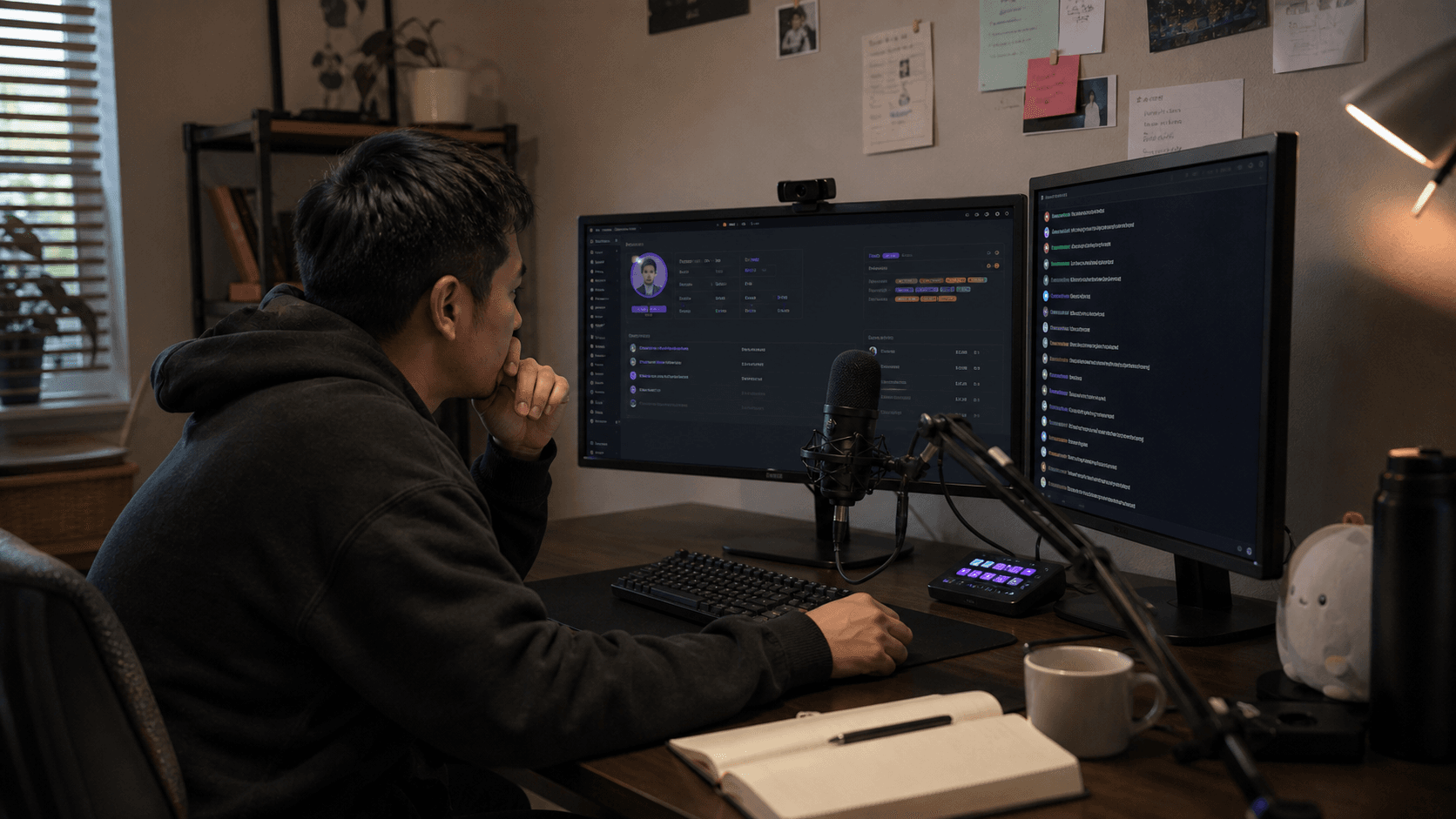
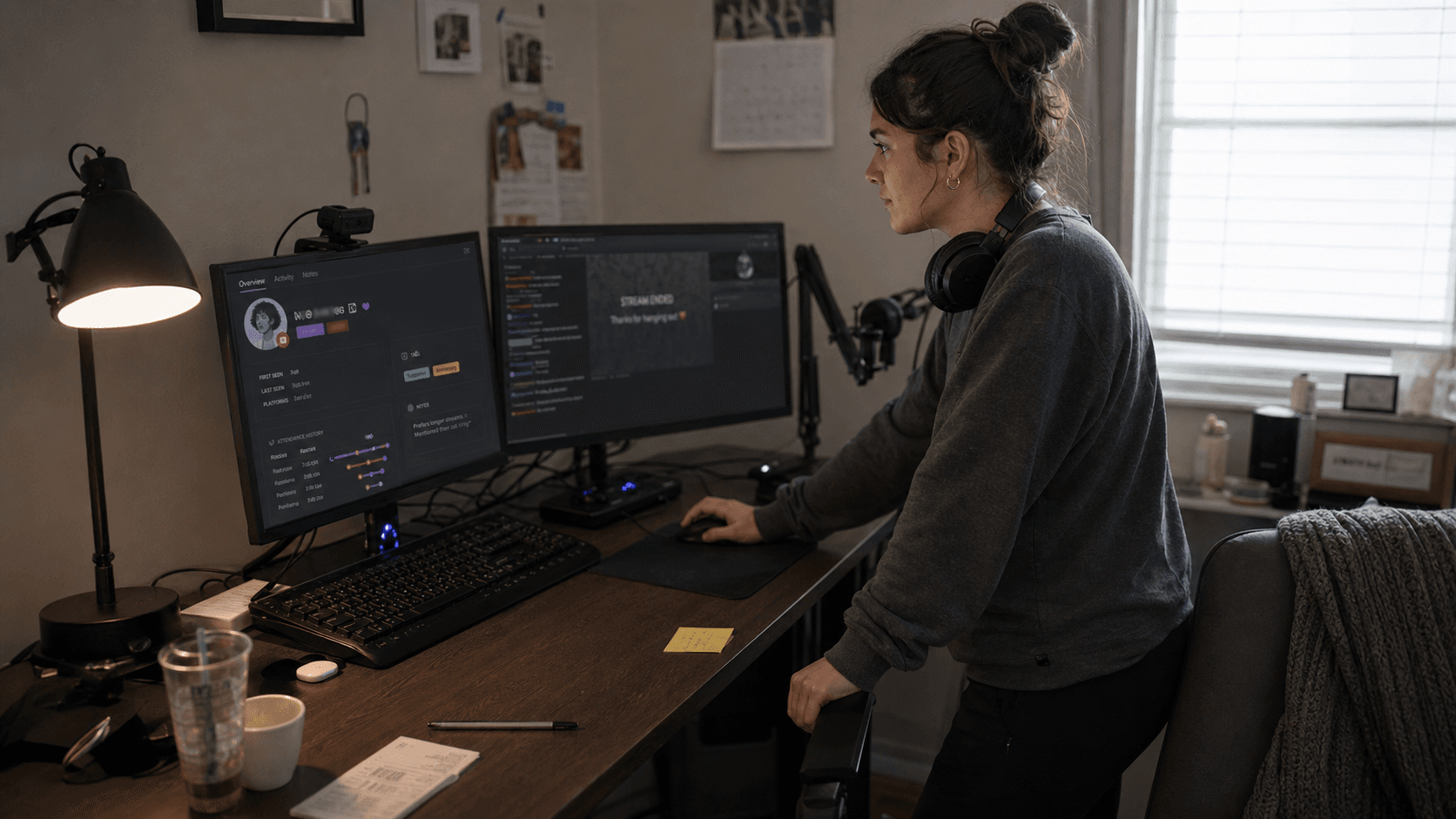
StreamBuddy builds a profile for each viewer as they chat, and surfaces it as they speak. That means the feed can tell you, at a glance, that this person is a regular rather than a first-timer — before you have to decide how to respond.
What accumulates on a profile:
- How often they show up, and when they were last around
- The topics they usually talk about
- Whether they subscribe, moderate, or are a member
- Their engagement history, per stream
None of that requires you to do anything during the stream. It is built from the chat that is already happening.
Notes and tags
Automatic history covers behaviour. It cannot cover the things people tell you.
Someone mentions they are taking their driving test on Thursday, or that they just moved cities, or that they are the one who always asks about the soundtrack. Save a note on their profile and it is there the next time they appear — three streams later, when you would otherwise have completely lost it.
Tags work the same way for grouping: your regulars, the people who help with mod duties, the ones who found you through a particular game. Both notes and tags persist with the viewer regardless of which platform they chat from next.
Supporters and mods
Subscribers, members, and moderators are surfaced inline in the feed with their status and history. The point is not the badge — platforms already show badges. The point is duration. Someone who has quietly resubscribed for fourteen months should not be indistinguishable from someone who subscribed this morning, and in a raw chat window they are.
Looking back after the stream
When the chat window closes, most of this normally evaporates. StreamBuddy keeps engagement history per viewer and per stream, so after you go offline you can look back at who took part and how the conversation moved — which is usually when you actually have time to notice that someone new showed up three streams running.
If you are still working on the reading half of the problem, combining your chats into one feed is the place to start.
Know who you are talking to
Bring your chats together and keep the history that makes returning viewers feel recognised — across Twitch, YouTube, TikTok, and more.
Try StreamBuddy- community
- viewers
- retention