What is chat engagement ratio?
Chat engagement ratio compares active chatters with viewers. Learn formulas, limits, and how to report stream engagement honestly.
5 min read
Chat engagement ratio is a simple way to ask a better question than "how many people were watching?"
It asks: how many of the people in the room actually participated in chat?
That can help streamers, sponsors, and teams understand audience quality. But it needs to be used carefully. A quiet stream is not automatically fake, and a loud stream is not automatically healthy.
Simple definition
Chat engagement ratio compares active chat participation with viewer count.
The most common version is:
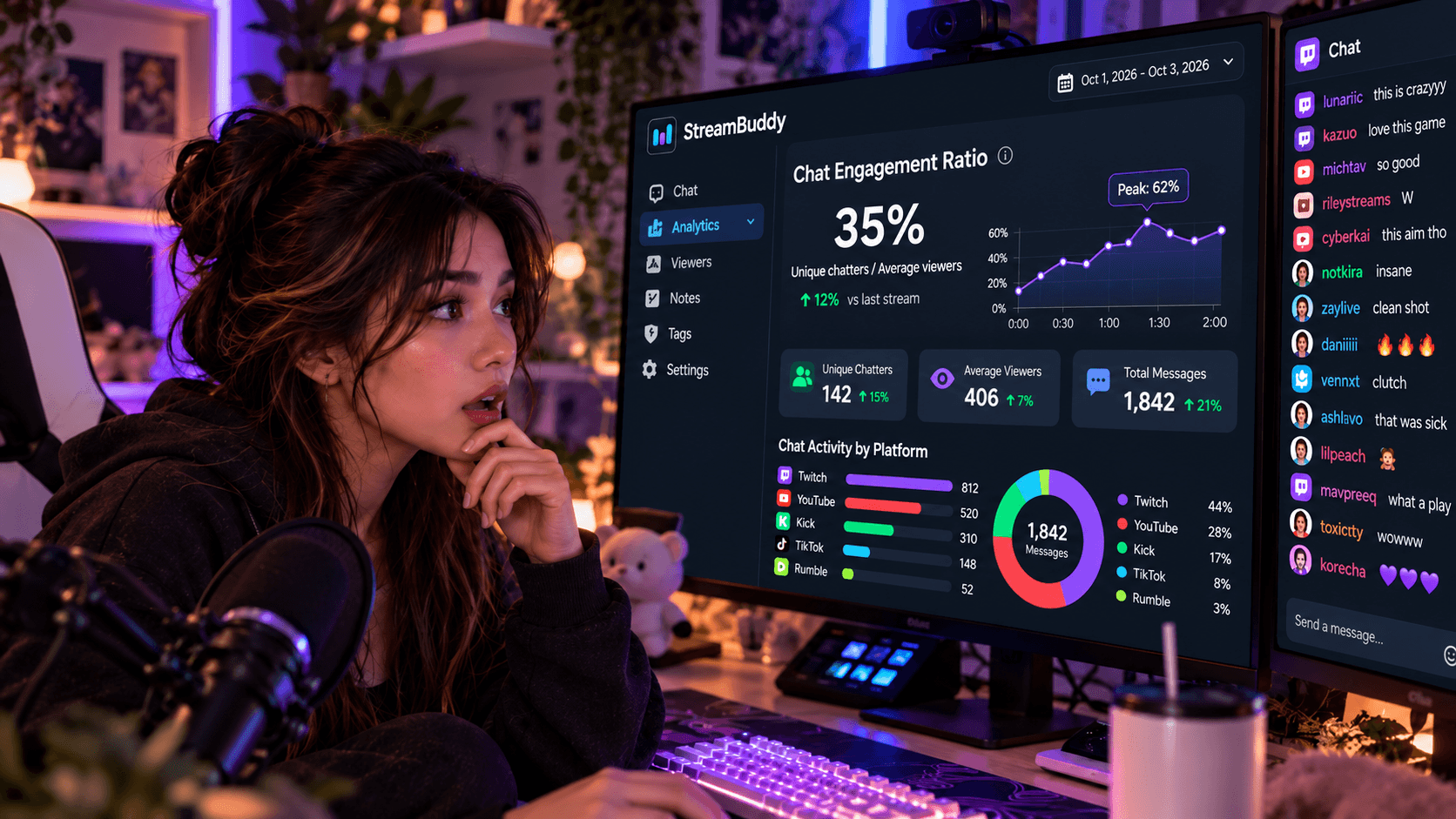
Chat engagement ratio = unique chatters / average viewers
Example:
- Average viewers: 100
- Unique chatters: 35
- Chat engagement ratio: 35%
That means 35 unique people sent at least one message during a stream where the average live audience was 100 viewers.
Example formulas
There is not one official formula. Use the version that matches the question you are asking.
| Formula | Use it when | Watch out for |
|---|---|---|
| Unique chatters / average viewers | You want a simple participation rate | Can go over 100% on long streams |
| Chat messages / average viewers | You want to understand message volume | A few very active people can inflate it |
| Returning chatters / unique chatters | You want to understand community retention | Does not count quiet regulars |
| Peak active chatters / peak viewers | You want to compare busy moments | Can overvalue one exciting spike |
For most streamers, the first formula is the best starting point. It is easy to explain and easy to compare across your own streams.
Why formulas are imperfect
Chat engagement ratio is useful, but it is not a truth machine.
It can be distorted by:
- Long streams with lots of viewer turnover.
- Raids that bring many chatters for a short time.
- Giveaway streams that create unusual chat volume.
- Lurkers who are engaged but quiet.
- Formats where viewers intentionally watch without typing.
- Multiple platforms with different chat cultures.
That is why the ratio should be treated as a signal, not a verdict.
Viewer count vs active chatters
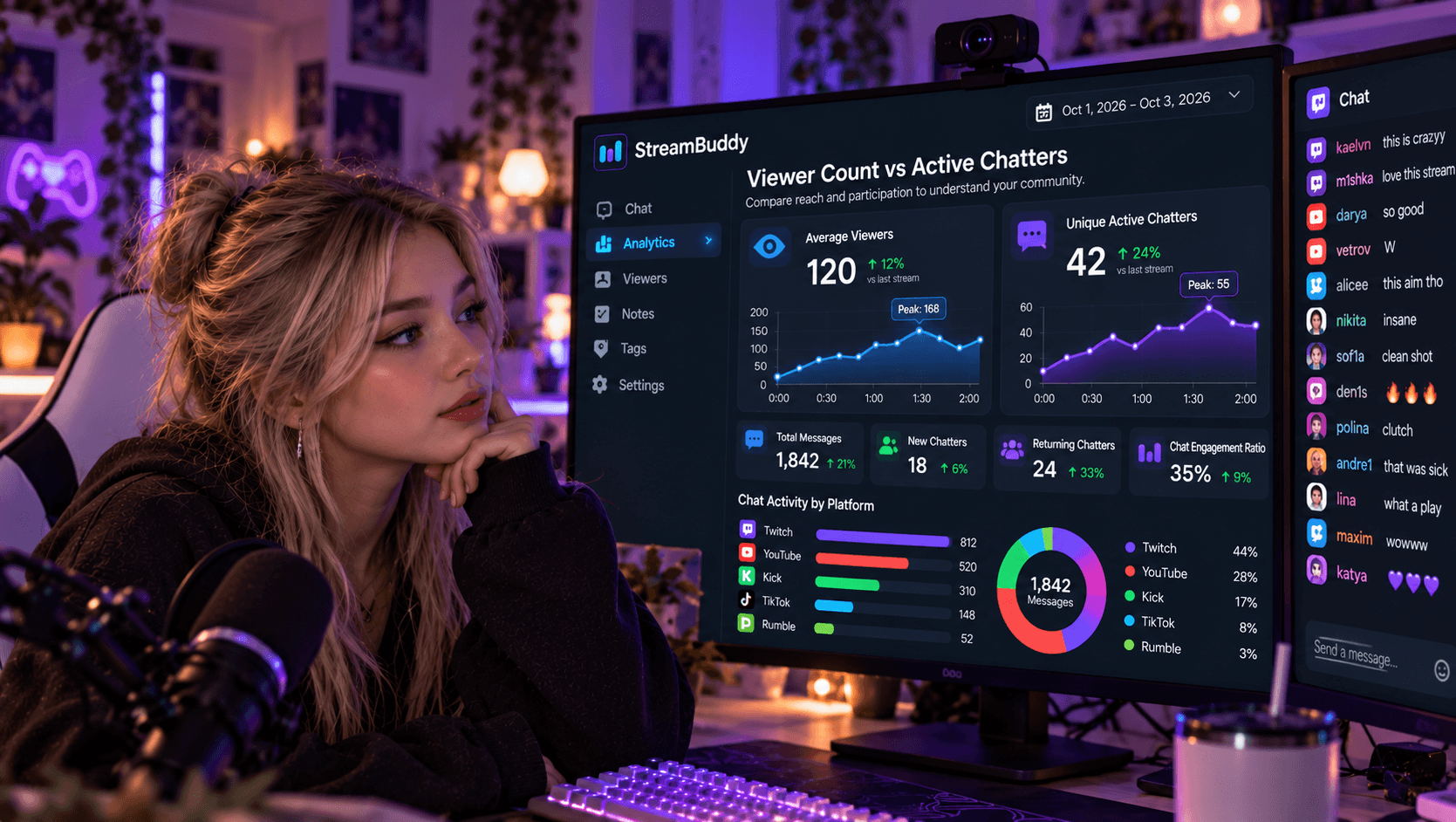
Viewer count tells you reach. Active chatters tell you participation.
Both matter.
A tutorial stream might have many quiet viewers because people are following along. A Just Chatting stream might have fewer viewers but a much louder chat. A sponsor activation might care more about returning chatters than raw peak viewers.
The right question is not "which number is better?" The right question is "what kind of audience behavior are we trying to understand?"
The chat engagement ratio page explains how StreamBuddy helps connect chat participation with a broader engagement story.
Signals StreamBuddy can help review
StreamBuddy focuses on the chat side of the engagement story.
Useful signals include:
- Unique chatters.
- New chatters.
- Returning chatters.
- Peak active chat moments.
- Chat activity by platform.
- Viewer notes and tags.
- Post-stream review of notable community moments.
Those signals become stronger when paired with your platform analytics. Your platform tells you reach, views, watch time, and average viewers. StreamBuddy helps you understand who actually spoke, who came back, and what happened in chat.
For retention-focused reporting, see the viewer retention analytics page. For after-stream review, use the post-stream analytics page.
Sponsor-friendly but honest reporting
Sponsors often care about whether an audience is real, responsive, and relevant. Chat engagement can help tell that story, but only when it is reported honestly.
Good sponsor reporting sounds like this:
- "We averaged 82 viewers and had 31 unique chatters."
- "Our returning-chatters share was higher than the previous stream."
- "The sponsored segment created the highest chat spike of the stream."
- "Questions about the product continued after the segment ended."
Weak reporting sounds like this:
- "Everyone was engaged."
- "The chat ratio proves the audience is authentic."
- "Low chat means fake viewers."
- "This one spike represents the whole channel."
Do not overclaim. Lurkers are real viewers. Some formats are naturally quiet. Some high-chat events are temporary. The strongest report combines average viewers, unique chatters, returning chatters, stream moments, and honest context.
Use multichat when reporting cross-platform streams
If you stream to several platforms, measuring only one chat can undercount engagement.
A Twitch viewer, YouTube viewer, and Kick viewer may all be participating in the same live show from different chat systems. StreamBuddy brings supported chats into one workspace so you can review the conversation across platforms instead of treating each chat as a separate universe.
The stream activity feed page shows how a unified feed can help make sense of what happened while live.
Private review vs public overlay
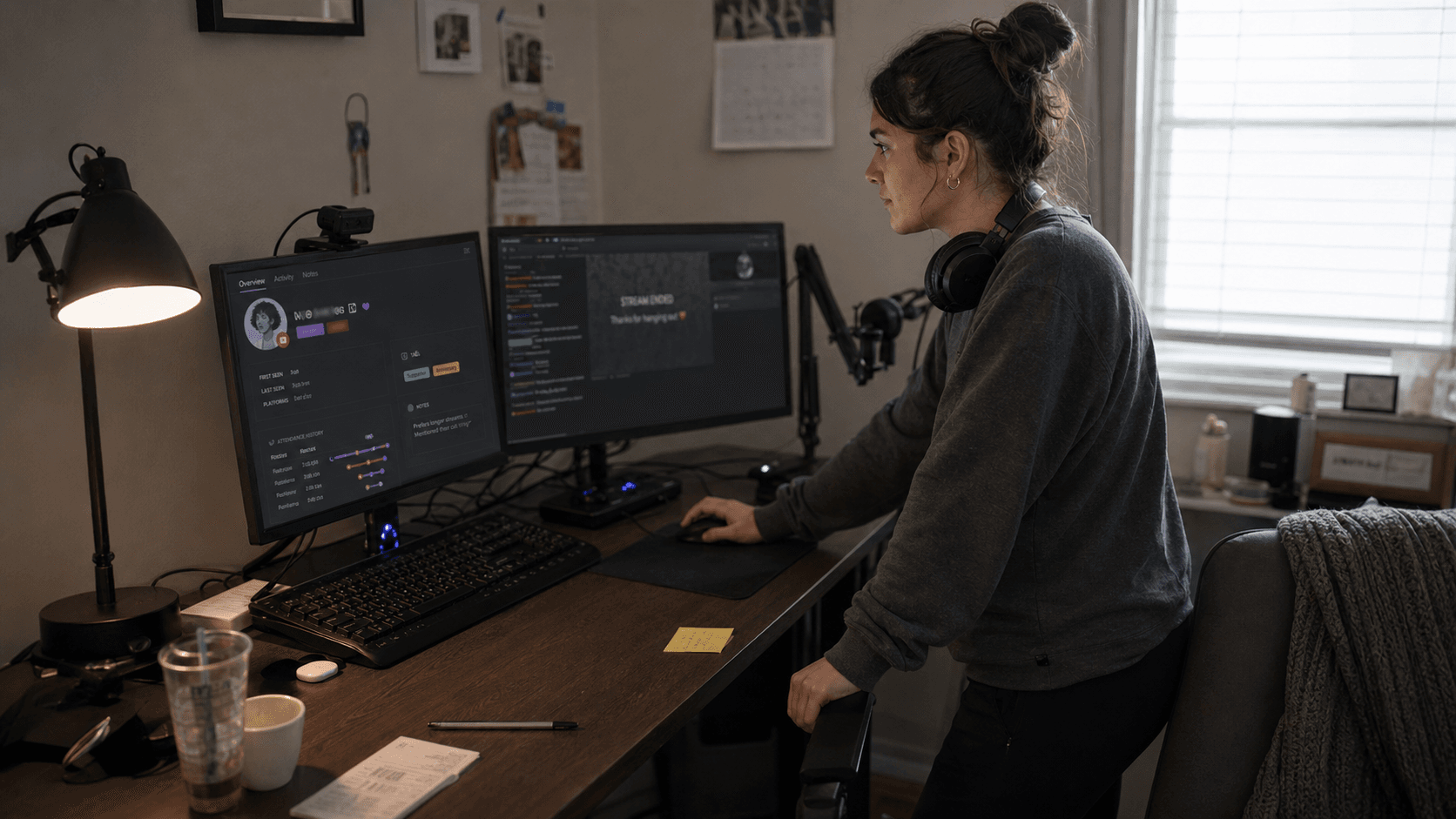
Chat engagement analysis belongs in your private workflow. Viewer notes, tags, platform filters, and post-stream insights should not appear in a public overlay.
StreamBuddy separates those surfaces:
- Use the private workspace for analysis, notes, tags, and viewer context.
- Use the public OBS overlay only when viewers should see chat on stream.
That keeps sponsor and retention review useful without turning private context into broadcast content.
Frequently asked questions
What is chat engagement ratio?
Chat engagement ratio is a measure of how many viewers participate in chat. A common formula is unique chatters divided by average viewers.
What is a good chat engagement ratio?
There is no universal benchmark. Compare your own streams over time and account for category, stream length, platform mix, and format.
Can chat engagement ratio go over 100%?
Yes. Unique chatters are counted across the whole stream, while average viewers are a typical-moment average. Long streams with lots of turnover can have more total chatters than average viewers.
Does low chat engagement mean fake viewers?
No. Some audiences lurk, some formats are quiet, and some platforms produce less chat. Use the ratio as one signal, not proof of audience quality by itself.
Can StreamBuddy calculate all of this automatically?
StreamBuddy helps with the chat side: unique chatters, returning chatters, platform chat activity, notes, tags, and post-stream review. Pair that with platform analytics for average viewers and watch-time metrics.
Understand engagement without overclaiming
Chat engagement ratio is useful because it moves the conversation beyond raw viewer count. It works best when you combine it with retention, active chat moments, and honest context.
Connect your accounts, go live with your current setup, use StreamBuddy to review multichat and post-stream activity, and build reports that explain how your community actually participated.
See the chat side of engagement
Use StreamBuddy to review unique chatters, returning viewers, platform activity, notes, and post-stream context across your supported chats.
Set up StreamBuddy- chat engagement
- engagement ratio
- stream analytics
- sponsors
- community