Viewer count vs active chatters: what streamers should measure
Learn what viewer count and active chatters each tell streamers about reach, participation, retention, sponsors, and community health.
6 min read
Viewer count is the number most streamers watch first. It is visible, immediate, and easy to compare.
Active chatters tell a different story. They show who actually participated, not just who had the stream open.
Neither number is enough by itself. Viewer count without chat context can overstate community health. Active chatters without viewer count can understate reach. The useful answer is to understand what each metric can and cannot tell you.
What viewer count tells you
Viewer count measures reach. It answers questions like:
- How many people had the stream open?
- How much distribution did the stream get?
- Did a raid, category change, collaboration, or title improve exposure?
- Did a sponsor segment reach enough people?
- Did a schedule or format change affect audience size?
Average viewers, peak viewers, and concurrent viewers are useful numbers. Sponsors often ask for them because they are easy to understand and compare.
But viewer count does not tell you whether people were talking, returning, interested, or emotionally invested.
What active chatters tell you
Active chatters measure participation. They answer questions like:
- How many people sent at least one message?
- Did the stream create conversation?
- Were new viewers comfortable speaking up?
- Did returning viewers keep participating?
- Which moments made chat react?
Active chatters are especially useful for community health because chat is where relationships become visible. If people ask questions, answer each other, welcome newcomers, and return over time, the channel is building more than passive reach.
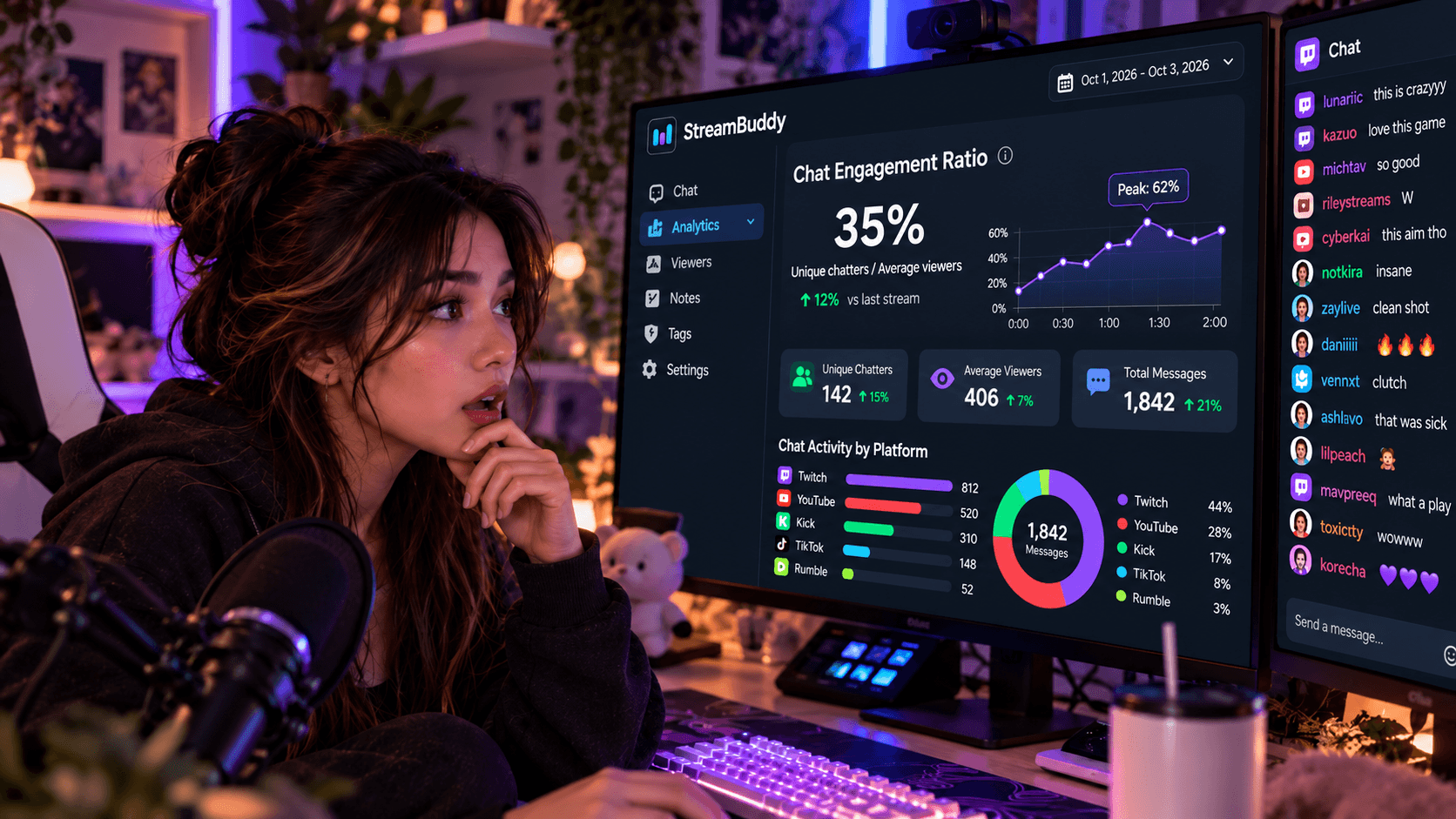
The chat engagement ratio page explains how to turn viewer count and unique chatters into a simple participation metric.
Why viewer count can mislead
Viewer count can rise for reasons that do not mean the community is healthier.
Examples:
- A raid brings a large temporary audience.
- A front-page or category boost increases passive viewers.
- A stream is embedded somewhere with low chat participation.
- A title pulls in curiosity clicks that do not return.
- Viewers lurk quietly because the format is watch-focused.
None of that makes viewer count bad. It just means viewer count is a reach metric, not a relationship metric.
Why active chatters can mislead
Active chatters can also be misunderstood.
Examples:
- A giveaway creates lots of low-quality chat activity.
- A few very active viewers make chat look busier than it is.
- A quiet educational stream may have engaged viewers who do not type.
- Some platforms have stronger chat cultures than others.
- Moderation or chat rules can shape how comfortable people feel speaking.
Active chatters are valuable, but they need context too. A lower-chat stream is not automatically worse, and a louder stream is not automatically better.
How returning viewers change the story
The most useful layer is not just "how many viewers?" or "how many chatters?"
It is "who came back?"
Returning viewers tell you whether people are forming a habit around your stream. Returning chatters tell you whether the live conversation is becoming familiar enough for people to rejoin.
For example:
| Stream | Average viewers | Active chatters | Returning chatters | What it may mean |
|---|---|---|---|---|
| A | 200 | 18 | 4 | Good reach, weak visible community |
| B | 75 | 32 | 24 | Smaller reach, stronger regular base |
| C | 120 | 50 | 8 | Good event energy, follow-up matters |
| D | 90 | 20 | 16 | Stable community with room for discovery |
The strongest story usually combines reach, participation, and retention.
That is why StreamBuddy focuses on viewer context, notes, tags, and returning-viewer signals around live chat. A name in chat matters more when you can tell whether the person is new, returning, tagged, or worth following up with.
What to measure after stream
After each stream, review a small set of numbers and notes:
- Average viewers and peak viewers from your platform analytics.
- Unique active chatters from your chat workflow.
- New chatters.
- Returning chatters.
- Chat spikes or moments that caused conversation.
- Regulars who showed up again.
- First-time chatters worth remembering.
- Questions or topics you should follow up on.
StreamBuddy helps with the chat side of that review: multichat activity, viewer context, returning chatters, notes, tags, and post-stream review. Your native platform analytics still matter for reach.
For deeper follow-up workflows, see the post-stream analytics page and the viewer retention analytics page.
Sponsor reporting: use both numbers honestly
Sponsors usually care about two things:
- Did the stream reach enough people?
- Did the audience pay attention and respond?
Viewer count supports the first question. Active chatters, chat spikes, returning viewers, and post-stream context support the second.
A useful sponsor summary might say:
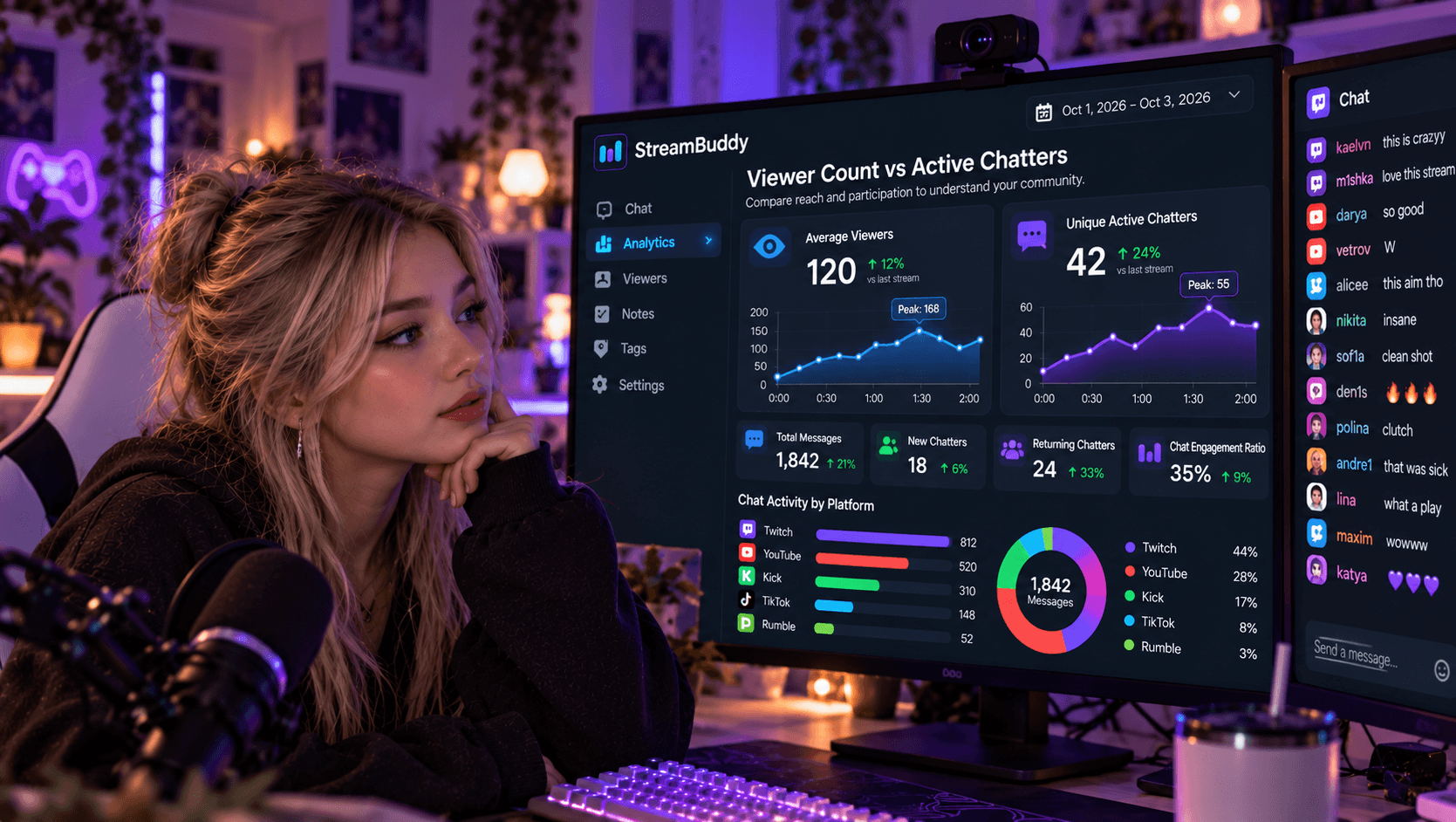
- "The stream averaged 110 viewers and peaked at 168."
- "Forty-two unique chatters participated across the stream."
- "The sponsored segment created the second-largest chat spike of the night."
- "Several returning viewers asked follow-up questions after the segment."
That is stronger than pretending one number explains everything.
Private analysis vs public overlay
Viewer count, active chatters, notes, tags, and retention review are private workflow tools. They help you understand the stream.
If you show chat on stream, keep the public overlay display-only. Do not expose private notes, tags, viewer profiles, or analysis dashboards to viewers.
StreamBuddy supports both sides:
- A private workspace for multichat, viewer context, notes, tags, and review.
- A public OBS overlay when chat should be visible on stream.
The remember regular viewers page shows how this viewer-memory layer helps make returning chatters feel recognized.
Frequently asked questions
Is viewer count more important than active chatters?
It depends on the question. Viewer count measures reach. Active chatters measure participation. Use both to understand stream health.
What are active chatters?
Active chatters are viewers who send at least one message during a stream. They are a useful signal for participation, but they do not include lurkers.
Should sponsors care about active chatters?
Yes, but as part of a broader story. Active chatters can show responsiveness and community involvement, while viewer count shows reach.
Can a stream have high viewer count and low chat?
Yes. Some formats are watch-focused, some audiences lurk, and some traffic sources create passive viewers. That does not automatically mean the audience is fake.
How does StreamBuddy help?
StreamBuddy helps streamers review the chat side of engagement: supported multichat, unique chatters, returning viewers, notes, tags, and post-stream context. Pair that with platform analytics for viewer count.
Build the stronger data story
Viewer count tells you how far the stream reached. Active chatters tell you who participated. Returning viewers and context tell you whether the community is building.
Connect your accounts, go live with your current setup, use StreamBuddy to review multichat and viewer context afterward, and build a stronger story than raw CCV alone.
Understand the people behind the numbers
Use StreamBuddy to review active chatters, returning viewers, notes, tags, and post-stream context across your supported chats.
Set up StreamBuddy- viewer count
- active chatters
- stream analytics
- chat engagement
- retention