Viewer loyalty points vs viewer loyalty
Compare loyalty points with real viewer loyalty, and learn how StreamBuddy adds returning-viewer context, notes, tags, and community memory.
5 min read
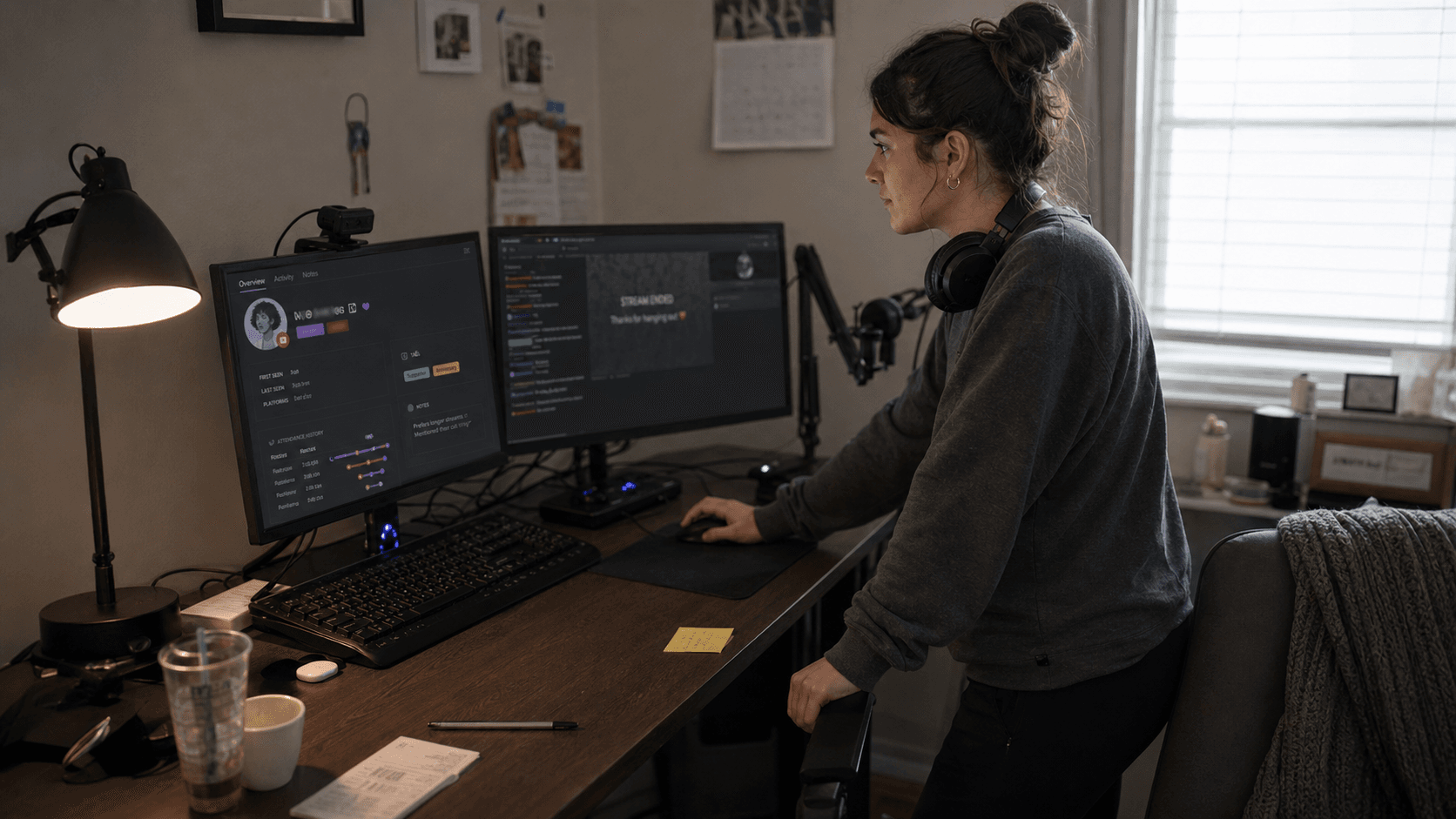
Loyalty points and viewer loyalty sound similar, but they answer different questions.
Loyalty points ask: how much activity has this viewer earned in a game-like system?
Viewer loyalty asks: who keeps coming back, who feels connected to the community, and what context helps you recognize them when they return?
Both can be useful. The mistake is treating a point total like the whole relationship.
What loyalty points measure
Loyalty points are usually run by a chatbot or stream bot. They can reward things like:
- Watch time.
- Chat messages.
- Commands.
- Channel games.
- Giveaways.
- Redemptions.
- Predictions or mini-games.
That can make a stream feel more interactive. Points are especially useful when you want a lightweight reward economy or a game viewers can opt into.
But points are a mechanic. They do not always explain whether someone feels loyal to the stream.
What real viewer loyalty looks like
Real viewer loyalty is usually quieter.
It can look like:
- A viewer returning every week without saying much.
- Someone helping a new chatter feel welcome.
- A raid visitor coming back on their own.
- A longtime viewer moving with you from Twitch to YouTube or Kick.
- A supporter remembering community jokes.
- A viewer asking follow-up questions across multiple streams.
Those moments do not always create the biggest point total. They do create community.
That is why StreamBuddy treats loyalty as viewer context: profiles, notes, tags, returning-viewer history, and post-stream review beside the same multichat workspace where you read messages. It does give each viewer a loyalty score, but the score is private to you. Viewers never see a balance, and there is nothing to spend.
For the landing page version of this comparison, see viewer loyalty score vs loyalty points.
Why points can miss quiet regulars
Points systems often reward visible actions.
That means they can undercount viewers who:
- Watch quietly.
- Chat a few meaningful times instead of spamming.
- Show up consistently but do not use commands.
- Support the stream outside the points economy.
- Help the community without chasing rewards.
A quiet regular may matter more to your channel than someone with a huge point total from automated games. Both can be valuable, but they are not the same signal.
One limit to know: StreamBuddy is chat-based too. It knows a viewer from the messages and events they send, so someone who never types is invisible to it as well. What it adds is a second measure. Its relationship tier counts how many of your streams someone has chatted in, so a viewer who says a little in many streams ranks as a regular, whatever their message count.
How notes, tags, and return history add context
Viewer memory adds the human layer points miss.
StreamBuddy helps you keep:
- Return history: who keeps coming back stream after stream.
- Private notes: what they told you, what you promised, or what they care about.
- Tags: groups like regulars, raid visitors, supporters, mods, or game-specific viewers.
- Platform context: where messages came from in a multichat workflow.
- Post-stream review: who deserves follow-up after the stream ends.
That context helps you recognize people in ways a points shop cannot.
If a viewer has a low point total but has shown up every stream for two months, you probably want to know that. If a first-time chatter returns after a raid, you want to greet them with context. If someone tells you they also watch on another platform, you want that written in a note, because each platform account has its own profile.
Using both together
You do not have to choose between loyalty points and viewer memory.
Use a chatbot or bot stack for:
- Commands.
- Timers.
- Points.
- Games.
- Spam filters.
- Moderation automation.
Use StreamBuddy for:
- Multichat.
- Viewer profiles.
- Private notes.
- Tags.
- Returning-viewer context.
- Chat history.
- Post-stream review.
This is the same relationship explained in streamer CRM vs chatbot: bots automate actions, while a streamer CRM helps you remember people.
Loyalty context helps retention
Retention is easier to understand when you can see the people behind the number.
Instead of only asking "who has the most points?", ask:
- Who returned after their first chat?
- Which regulars have gone quiet?
- Which raid visitors came back?
- Which platform are your regulars on?
- Which topics bring people back?
- Who deserves a follow-up note before next stream?
StreamBuddy's viewer retention analytics and remember regular viewers workflows are built around that kind of human context.
Keep loyalty context private
Point totals can be public if that is part of your channel game.
Viewer notes and relationship context should stay private.
If you show chat on stream, use a public overlay for messages, usernames, platform badges, emotes where available, and stream-safe styling. Keep notes, tags, viewer profiles, loyalty context, and moderation details inside the private StreamBuddy workspace.
That lets you recognize viewers without publicly ranking or labeling them in a way that feels uncomfortable.
FAQ
Are loyalty points the same as viewer loyalty?
No. Loyalty points are a reward economy. Viewer loyalty is the pattern of people returning, participating, supporting, and becoming part of the community.
Should I remove my points bot?
Not necessarily. If your viewers enjoy points, keep them. StreamBuddy can sit beside your bot as the multichat and viewer-memory layer.
What does StreamBuddy add that points do not?
StreamBuddy adds viewer profiles, private notes, tags, return history, platform context, post-stream review, and a private workspace for understanding the people behind chat.
Does StreamBuddy restream my video?
No. StreamBuddy is focused on multichat, viewer context, viewer memory, and chat-friendly workflows. It works alongside your current streaming setup.
Remember people, not just point totals
Points can make chat fun. Memory makes the community feel real.
Connect your supported accounts in StreamBuddy, go live with your current setup, keep your points bot if you use one, and let StreamBuddy help you remember who returns, what they care about, and why they matter.
Understand viewer loyalty with context
Use StreamBuddy beside your current stream setup to keep multichat, private notes, tags, returning-viewer history, and post-stream review close to chat.
Try StreamBuddy- viewer loyalty
- loyalty points
- viewer retention
- streamer CRM
- community